Dollar near one-week high as US-Iran tensions flare, yen nears intervention zone
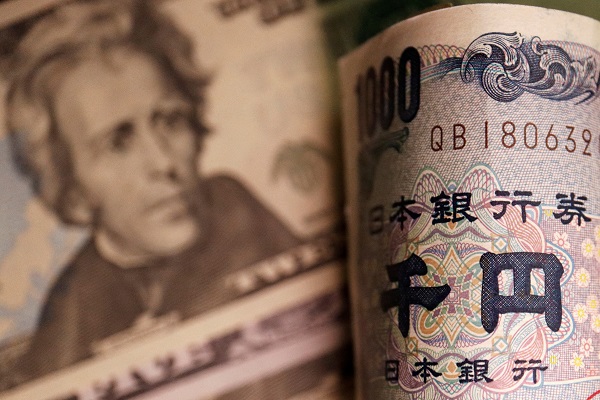
The dollar held firm near a one-week high on Thursday on a Reuters report that the U.S. had carried out new strikes in Iran targeting a military site, while the yen softened towards a level that triggered central bank intervention last month.
The strikes complicated peace talks underway between Washington and Tehran. Earlier on Wednesday, President Donald Trump had said he was "not satisfied" on a deal with Iran, and dismissed an Iranian state media report that Iran and Oman would jointly manage shipping through the Strait of Hormuz as part of a peace deal.
Oil prices rebounded and the safe-haven dollar steadied as hopes of a swift resolution faded, with investors now increasingly expecting the greenback to break higher as the Federal Reserve shifts its focus to battling inflation amid elevated energy prices.
"Geopolitics and the subsequent inflation risks remain a key concern," Alex Saunders, Citi's head of global quant macro strategy, wrote. "We continue to see a trim in the USD underweight."
The euro was a shade lower at $1.1620, while the pound was down 0.1% at $1.34176.
The risk-sensitive Australian dollar weakened 0.2% to $0.71305 and the New Zealand dollar was largely flat at $0.58965.
The dollar index, which measures the greenback's strength against a basket of six major peers, was steady at 99.288, near its highest level since May 22.
Markets will now look ahead to today's release of the Fed's preferred inflation gauge, the core PCE deflator, which will help shape the broader interest rate outlook.
The yen weakened to as far as 159.60 per dollar on Thursday, the lowest since April 30 and within sight of the 160 level that triggered intervention by Japanese authorities last month.
That intervention bought policymakers some breathing room, but questions linger over its lasting impact, said Tony Sycamore, market analyst at IG.
"The broader question is whether it was worth it for what essentially amounts to just a single month's relief. And furthermore, will authorities have the stomach to write a similar-sized cheque if the 160 level is breached again in the coming sessions?" he said.
Markets are pricing a roughly 70% chance of a quarter-point interest rate rise at the BOJ's June 15–16 policy meeting, LSEG data showed.