Gujarat Kharif Sowing Reaches 67.48 Lakh Hectares by Amit Gupta, Kedia Advisory
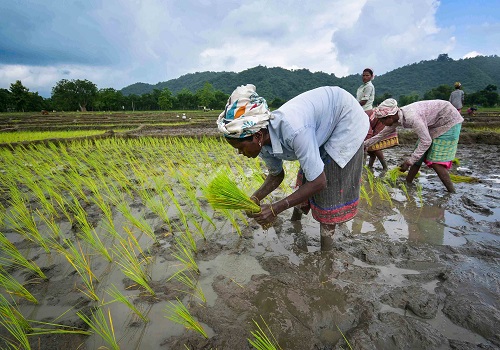
Gujarat's Kharif 2026 sowing reached 67,47,788 hectares as of 3 August 2026, representing 79.10% of the state's normal sowing area of 85,30,803 hectares. Total sown area remains below 70,47,097 hectares recorded during the corresponding period last year. Oilseed sowing showed mixed trends, with soybean (104.55%) and groundnut (103.26%) exceeding their normal area, while castor (18.92%) and sesamum (22.05%) lagged significantly. Among pulses, tur and urid reported strong progress, whereas moong remained well below normal. Overall, sowing momentum continues but remains uneven across major crops.
Key Highlights
* Gujarat's total Kharif sowing reached 67,47,788 hectares, covering 79.10% of the normal area.
* Soybean (104.55%) and groundnut (103.26%) exceeded their normal sowing area.
* Tur and Urid showed healthy sowing progress at 84.16% and 94.93% of normal, respectively.
* Castor (18.92%), Sesamum (22.05%), and Moong (35.86%) remained significantly below normal.
* Total cereal, pulse, oilseed, and other crop sowing all remained below their respective normal area benchmarks.
Agricultural commodity prices are likely to remain supported as Gujarat's latest Kharif sowing data reflects uneven planting progress across major crops. While soybean and groundnut have surpassed their normal sowing levels, slower acreage expansion in cereals, pulses and several oilseeds may keep supply concerns alive if weather conditions do not improve during the remainder of the season. The mixed sowing pattern is expected to influence market sentiment across agricultural commodities.
According to the Gujarat Agriculture Department, total Kharif sowing reached 67,47,788 hectares as of 3 August 2026, covering 79.10% of the state's normal area of 85,30,803 hectares. However, the area remained below the 70,47,097 hectares reported during the corresponding period last year. Total cereal crops covered 10,64,790 hectares, while pulses reached 3,22,740 hectares and total oilseed crops accounted for 24,12,351 hectares. Other crops, including cotton, vegetables and fodder, occupied 29,47,906 hectares.
Among individual crops, soybean emerged as the strongest performer, covering 2,94,073 hectares, or 104.55% of its normal area, followed by groundnut at 19,77,756 hectares (103.26% of normal). Urid and tur also recorded encouraging progress, whereas castor, sesamum, moong, guar seed, and tobacco remained well below their normal sowing levels. Cotton sowing reached 20,87,325 hectares, representing 87.58% of its normal area, while maize achieved 93.13% of normal coverage.
Gujarat's Kharif sowing remains below normal overall, although strong soybean and groundnut acreage provides support, while weaker sowing in several crops keeps production uncertainty elevated.
Above views are of the author and not of the website kindly read disclaimer