How Cruise Control Maintains Speed
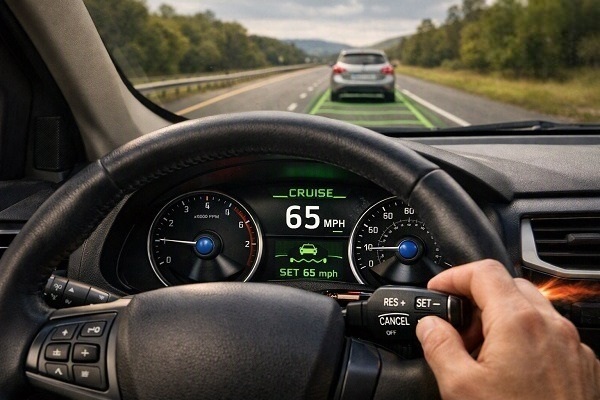
Cruise control is a feature designed to maintain a vehicle's selected speed without requiring the driver to continuously press the accelerator. It can make long highway journeys more comfortable by reducing the need for constant pedal adjustments.
Although the system may seem simple, several electronic and mechanical components work together to keep the vehicle moving at the chosen speed.
The Driver First Sets a Target Speed
When cruise control is activated, the driver selects a speed, such as 80 km/h. The car's electronic control system stores this value as the target speed.
The vehicle then continuously compares its actual speed with the selected speed.
Speed Sensors Keep Track of the Vehicle
The cruise control system needs to know how fast the car is moving. It receives speed information from sensors, often using data from the vehicle's wheel-speed sensors or other electronic speed signals.
This information is constantly updated so the system can detect even small changes in speed.
The System Controls Acceleration
Suppose the driver sets cruise control to 80 km/h but the vehicle slows to 75 km/h while climbing a hill.
The system detects the difference between the actual speed and the target speed. It then increases engine output, allowing the vehicle to accelerate back toward 80 km/h.
When the vehicle reaches the target speed, the system reduces the additional acceleration.
What Happens Going Downhill?
The opposite can happen on a downhill section. Gravity can cause the vehicle to accelerate beyond the selected speed.
Depending on the vehicle and system design, cruise control can reduce engine power and, in some vehicles, work with the transmission or braking system to help control speed.
Basic cruise control generally has more limited control than advanced adaptive systems, especially when significant braking is required.
The Throttle Is Controlled Electronically
Modern vehicles commonly use electronic throttle control. Instead of a physical cable directly connecting the accelerator pedal to the throttle, electronic signals tell the engine system how much power is needed.
Cruise control can use this system to request more or less engine output without the driver's foot continuously operating the accelerator.
Transmission Can Also Play a Role
Automatic transmissions can change gears when necessary to help maintain the selected speed.
For example, when climbing a steep incline, the transmission may downshift to provide more engine power. On a descent, it may select a lower gear in some situations to increase engine braking.
The exact behavior depends on the vehicle's transmission and software calibration.
Cruise Control Does Not “Lock” the Car at One Exact Speed
The system continuously makes small adjustments rather than forcing the vehicle to remain at one perfectly fixed speed under every condition.
Changes in road slope, wind, vehicle load, tyre conditions, and other factors can cause slight variations around the selected speed.
The control system responds to these changes and attempts to bring the vehicle back toward the target.
Why Cruise Control Cancels When You Brake
Safety is a major reason cruise control is designed to disengage when the driver applies the brake.
Pressing the brake indicates that the driver wants direct control over vehicle speed. The system therefore stops automatically controlling acceleration.
Many vehicles also cancel cruise control when the clutch is pressed in a manual-transmission car.
Cruise Control vs Adaptive Cruise Control
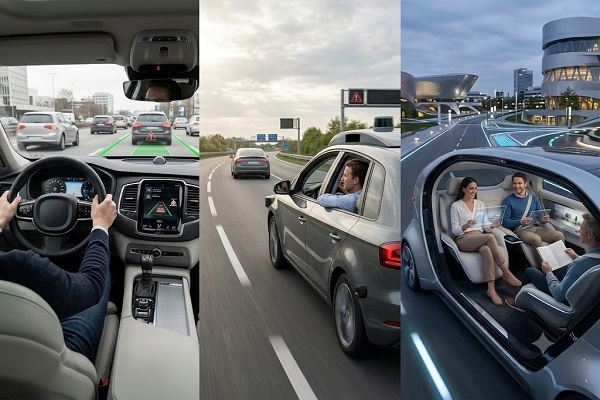
Traditional cruise control primarily focuses on maintaining the speed selected by the driver.
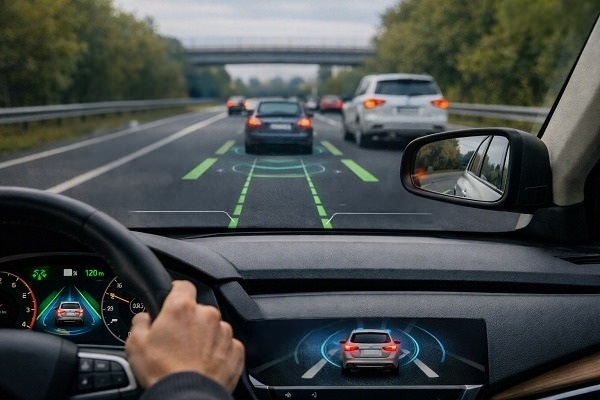
Adaptive cruise control adds another layer. It uses sensors such as radar and cameras to detect traffic ahead and can automatically adjust the vehicle's speed to maintain a chosen following distance.
This means adaptive cruise control can slow down when traffic ahead becomes slower and accelerate again when the road clears, within the system's operating limits.
Why Cruise Control Works Best on Suitable Roads
Cruise control is generally most useful on roads with relatively steady traffic and predictable conditions.
Frequent stops, sharp curves, heavy congestion, poor weather, or complicated road situations may require the driver's continuous attention and direct control.
The driver remains responsible for monitoring the road even when cruise control is active.
Final Thoughts
Cruise control maintains speed by continuously comparing the vehicle's actual speed with the driver's selected target. The vehicle's electronic control systems can then adjust engine output and, depending on the vehicle, transmission or braking behavior to bring the speed back toward the target.
What feels like the car simply “holding” a speed is actually a continuous cycle of sensing, comparing, and adjusting.