How Electric Cars Work
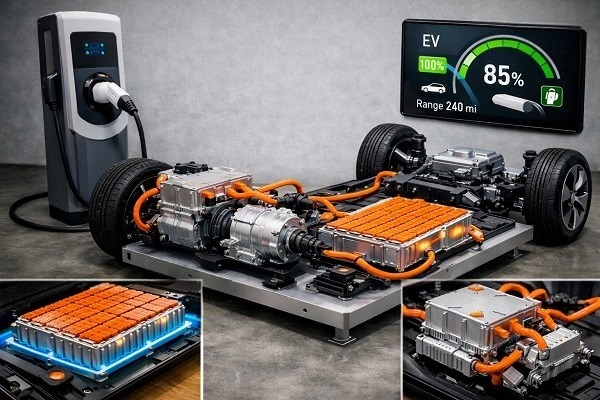
Electric cars are changing the way people think about transportation. Instead of using petrol or diesel to power an internal combustion engine, electric vehicles (EVs) use electricity stored in a battery to drive an electric motor.
The technology may seem complicated at first, but the basic process is fairly simple: electricity is stored in the battery, sent to the motor, and converted into motion that turns the wheels.
The Battery Stores Electricity
The battery is one of the most important components of an electric car. Most modern EVs use large lithium-ion battery packs located underneath the vehicle.
The battery stores electrical energy in the form of direct current (DC). Its capacity is generally measured in kilowatt-hours (kWh). A larger battery can typically store more energy, although factors such as vehicle weight, driving conditions, and efficiency also affect range.
The Electric Motor Creates Movement
When you press the accelerator, electricity flows from the battery toward the electric motor.
The motor converts electrical energy into mechanical energy. This creates rotational force, which is transferred to the wheels and moves the car forward.
Unlike a traditional petrol or diesel engine, an electric motor can deliver substantial torque almost immediately. This is one reason EVs can feel quick and responsive when accelerating.
The Inverter Controls Electricity
The battery supplies DC electricity, while many electric motors operate using alternating current (AC).
An inverter helps convert and control the electricity between the battery and motor. It regulates how much power the motor receives based on the driver's accelerator input.
In simple terms, the inverter acts as an electronic controller between the battery and the motor.
The Car's Electronic Systems Manage Everything
An electric vehicle contains several electronic control units that monitor and manage different systems.
The battery management system, for example, monitors factors such as battery temperature, voltage, and charge levels. It helps keep the battery operating within appropriate limits.
Other electronics control the motor, charging system, climate control, safety features, and other vehicle functions.
Regenerative Braking Recovers Energy
One interesting feature of many electric cars is regenerative braking.
When the driver slows down, the electric motor can operate in reverse as a generator. Instead of allowing some of the vehicle's kinetic energy to be lost entirely as heat through conventional braking, part of that energy can be converted back into electricity and sent to the battery.
This can improve overall efficiency and may help extend driving range.
How an Electric Car Gets Charged
EVs can be charged by connecting the vehicle to an external power source.
Home charging is commonly done through an AC charger. The vehicle's onboard charger converts the incoming AC electricity into DC electricity that can be stored in the battery.
DC fast-charging stations can supply electricity more directly to the battery, allowing compatible vehicles to recharge much faster.
Charging speed depends on the vehicle, charger, battery condition, temperature, and other factors.
What Determines an EV's Range?
Electric-car range depends on several factors. Battery capacity is important, but it is not the only consideration.
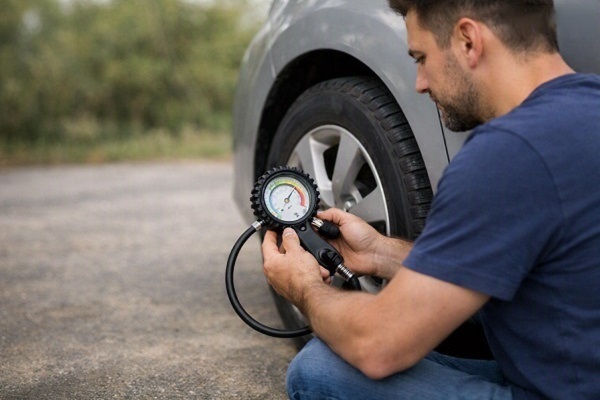
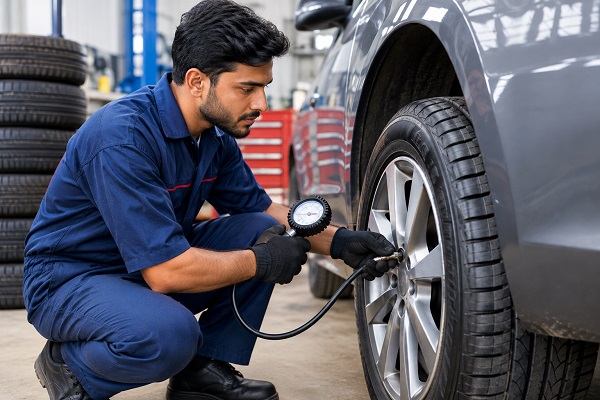
Vehicle weight, tyre pressure, speed, traffic, weather, road conditions, heating or air conditioning use, and driving style can all influence energy consumption.
High-speed highway driving, for example, can consume more energy because aerodynamic resistance increases significantly with speed.
What Happens When the Battery Gets Low?
When the battery charge becomes low, the vehicle provides warnings to the driver. Depending on the model, the car may also reduce available performance to conserve energy.
Once the battery reaches a critically low level, the vehicle will eventually stop operating and need to be recharged.
Most EVs are designed with battery-management protections to help prevent damage from excessive charging or discharging.
Do Electric Cars Have Gears?
Many electric cars use a simple single-speed reduction gear rather than a conventional multi-speed transmission.
Electric motors can operate efficiently across a wide range of speeds and provide strong torque from low speeds, reducing the need for multiple gears.
This also means EV drivetrains generally have fewer moving components than traditional powertrains.
How Electric Cars Differ from Petrol Cars
The biggest difference is the way energy is converted into movement.
A petrol or diesel car burns fuel inside an engine to create mechanical power. An electric car uses electrical energy stored in a battery and converts it into mechanical power through an electric motor.
EVs generally have fewer drivetrain components that require traditional engine-related maintenance, although they still need tyres, brakes, suspension, fluids, software updates, and other forms of maintenance.
Final Thoughts
Electric cars work by combining a battery, electric motor, inverter, charging system, and electronic controls to convert stored electricity into movement.
The basic process is straightforward: the battery stores energy, the electronic systems control its delivery, the motor converts that energy into motion, and regenerative braking can recover some energy while slowing down.
As battery technology, charging infrastructure, and vehicle efficiency continue to develop, electric vehicles are becoming an increasingly important part of modern transportation