How to Prepare Your Bike for a Long Road Trip
A long motorcycle road trip can be one of the most exciting ways to explore new destinations, but proper preparation is essential for a safe and enjoyable journey. Before setting off, it's important to ensure that both you and your bike are ready to handle long hours on the road. A little planning can help prevent unexpected breakdowns and make your ride much more comfortable.
The first step is to get your bike thoroughly inspected. If your motorcycle is due for servicing, complete it before your trip. Ask a trusted mechanic to check the engine, brakes, clutch, suspension, chain, battery, and electrical system. Fixing minor issues in advance is far better than dealing with them in the middle of nowhere.
Next, inspect your tyres carefully. Make sure the tyre pressure matches the manufacturer's recommendation and check for cracks, cuts, or uneven wear. Tyres with good tread provide better grip, especially during rainy conditions or on rough roads.
Engine oil is another critical component. Fresh engine oil keeps the engine lubricated and prevents overheating during long rides. Also, check the coolant level (for liquid-cooled bikes), brake fluid, and other essential fluids to ensure everything is in proper working condition.
Don't forget the chain and sprocket. Clean the chain thoroughly, lubricate it properly, and adjust the chain tension if needed. A well-maintained chain improves performance, reduces wear, and minimizes the risk of mechanical issues during the journey.
Pack only the essentials and distribute the luggage evenly. Overloading the motorcycle can affect handling and fuel efficiency. Use quality saddlebags or luggage straps to secure your belongings firmly so they don't shift while riding.
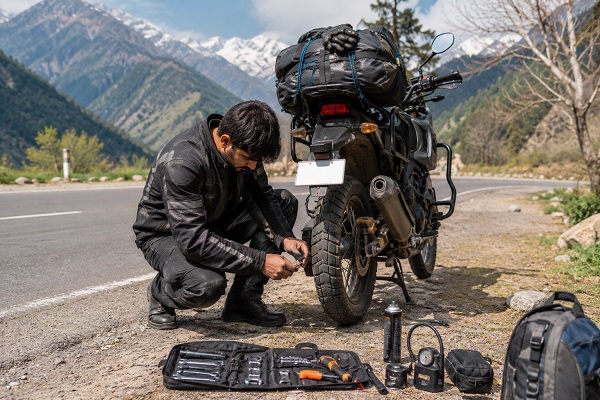
Carrying a small emergency toolkit is highly recommended. Include basic tools, a tyre puncture repair kit, portable air pump, spare fuses, zip ties, electrical tape, flashlight, chain lubricant, and a power bank. These items can help you deal with minor problems without waiting for roadside assistance.
Safety gear is just as important as bike preparation. Wear a certified helmet, riding jacket with protective armour, gloves, riding pants, and sturdy boots. Good riding gear provides protection against weather, fatigue, and unexpected accidents.
Before starting your trip, plan your route in advance. Identify fuel stations, rest stops, food outlets, and accommodation along the way. Download offline maps in case you lose network coverage in remote areas.
Stay hydrated and take regular breaks during the ride. Riding continuously for long hours can reduce concentration and increase fatigue. Taking a short break every two to three hours allows you to stretch, relax, and stay alert throughout the journey.
Finally, make sure all your documents are up to date. Carry your driving licence, Registration Certificate (RC), valid insurance, Pollution Under Control (PUC) certificate, and emergency contact information. Keeping digital copies on your phone is also a good backup.
Conclusion
A memorable road trip begins with proper preparation. A well-maintained motorcycle, the right riding gear, careful route planning, and essential emergency supplies can make your journey safer and more enjoyable. By spending a little time preparing before you leave, you can focus on what truly matters—enjoying the open road and creating unforgettable travel experiences.