Things to Check Before Buying an Electric Scooter: A Complete Buyer's Guide
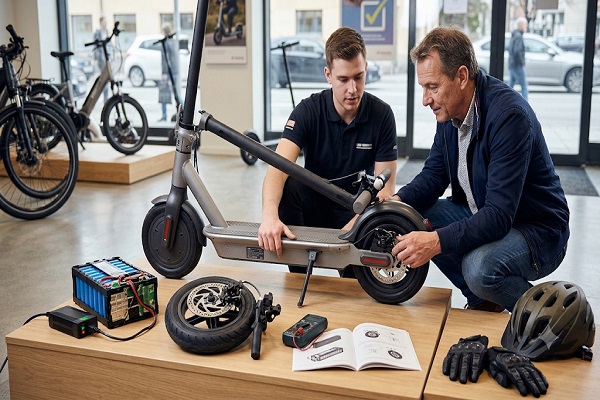
Electric scooters are becoming an increasingly popular choice among Indian consumers looking for affordable, convenient and environmentally conscious transportation. With rising interest in electric mobility, several manufacturers now offer scooters with different battery capacities, riding ranges, charging options and smart features.
However, choosing the right electric scooter involves more than comparing prices or advertised mileage. Buyers should carefully evaluate battery performance, real-world range, charging facilities, safety features, maintenance costs and after-sales service before making a purchase.
Here are the most important things to check before buying an electric scooter in India.
1. Battery Capacity and Battery Type
The battery is one of the most important components of an electric scooter because it directly influences its performance, range and charging requirements.
Most modern electric scooters use lithium-ion battery packs, although battery chemistry and specifications vary across manufacturers.
Before purchasing, check:
Battery capacity, generally measured in kilowatt-hours (kWh).
Battery chemistry and expected lifespan.
Battery warranty and replacement conditions.
Whether the battery is removable or fixed.
Availability and estimated cost of battery replacement.
A higher-capacity battery may offer a longer range, but it can also increase the scooter's price and weight. Choose a battery capacity that matches your daily travel requirements.
2. Real-World Driving Range
Manufacturers often advertise the maximum range of an electric scooter under specific testing conditions. However, actual range may differ depending on riding speed, traffic, road conditions, passenger weight, weather and riding mode.
For example, frequent acceleration, high-speed riding and carrying additional weight can reduce battery efficiency.
Before buying, ask the dealer about the expected real-world range and compare it with the manufacturer's certified figures.
Consider your daily commuting distance and maintain a reasonable battery reserve rather than selecting a scooter that barely meets your travel requirements.
3. Charging Time and Charging Options
Charging convenience is another important factor when choosing an electric scooter.
Some models support home charging through a standard electrical socket, while others may offer faster charging options or compatibility with specific charging infrastructure.
Check the following details:
Total charging time from 0% to 100%.
Charging time from 20% to 80%.
Whether a home charger is included.
Cost of additional charging equipment.
Compatibility with available public charging stations.
Charging requirements and electrical safety guidelines.
If you live in an apartment, check whether you can safely access a suitable charging point in your parking area. Also confirm whether your housing society permits the installation of charging equipment.
4. Motor Power and Performance
An electric scooter's motor determines its acceleration, speed and ability to handle different road conditions.
Buyers should compare the motor's rated power and peak power, along with the scooter's claimed top speed.
Important performance factors include:
Acceleration in city traffic.
Performance while climbing slopes.
Ability to carry a pillion passenger.
Stability at different speeds.
Performance under different riding modes.
A scooter designed primarily for city commuting may not offer the same performance as a premium electric model. Choose according to your daily usage instead of paying extra for power you may rarely need.
5. Safety Features and Braking System
Safety should be a major consideration when purchasing any two-wheeler.
Electric scooters are available with different braking systems and electronic safety features. Buyers should understand which features are included in the selected variant.
Important features to check include:
Combined Braking System (CBS) or Anti-lock Braking System (ABS), where available.
Front and rear braking performance.
Tyre grip and road stability.
Bright headlights and tail lamps.
Side-stand motor cut-off, where available.
Battery protection and thermal management systems.
Also check the scooter's overall build quality, suspension and stability during a test ride. Do not assume that every electric scooter offers the same safety equipment.
6. Warranty and Battery Replacement Cost
Electric scooter buyers should carefully read the warranty terms before completing the purchase.
The battery is a major component, and replacing it outside the warranty period can be expensive.
Check:
Battery warranty duration and kilometre limit.
Motor warranty.
Vehicle warranty.
Conditions for warranty claims.
Battery degradation coverage, if offered.
Availability and price of replacement batteries.
Some warranties may include specific conditions relating to battery capacity retention, usage and servicing. Ask the dealer to explain these terms in writing.
7. Service Network and After-Sales Support
A competitive purchase price does not always guarantee a good ownership experience. Reliable service support is essential, particularly for electric vehicles.
Before selecting a brand, check the availability of authorised service centres in your city and nearby areas.
Consider these questions:
Is an authorised service centre available nearby?
How long does routine servicing take?
Are spare parts easily available?
Does the company provide roadside assistance?
How are battery-related complaints handled?
What is the estimated annual maintenance cost?
A brand with accessible service facilities and dependable customer support can make ownership more convenient.
8. Comfort, Seating and Storage Space
An electric scooter should be comfortable for both the rider and pillion passenger.
Since many buyers use scooters for daily commuting, seating position and storage space deserve attention.
During the test ride, check:
Seat height and cushioning.
Footboard space.
Handlebar position.
Suspension performance.
Pillion seating comfort.
Under-seat storage capacity.
Ease of handling in crowded traffic.
Also check whether the under-seat storage can accommodate your helmet. Some models have limited storage because of battery placement.
9. Tyres, Suspension and Ground Clearance
Indian roads include potholes, uneven surfaces, speed breakers and different road conditions. Therefore, an electric scooter should offer suitable tyres and suspension.
Check the tyre size, tyre type and availability of replacements.
Ground clearance is equally important, especially if you frequently travel on roads with high speed breakers.
During the test ride, observe how the scooter handles uneven roads and whether the suspension provides sufficient comfort.
10. Smart Features and Connectivity
Many modern electric scooters come with digital instrument clusters, smartphone connectivity and connected vehicle technology.
Depending on the model, these features may include:
Navigation assistance.
Bluetooth connectivity.
Mobile application support.
Anti-theft alerts.
Live vehicle tracking.
Battery status monitoring.
Riding statistics.
Over-the-air software updates.
These features can improve convenience, but buyers should check whether they require paid subscriptions or additional charges after a certain period.
11. Total Ownership Cost
An electric scooter may have a higher or lower initial purchase price compared with a petrol scooter, depending on its model and features. However, the overall ownership cost should be considered before making a decision.
Calculate the following expenses:
Ex-showroom and on-road price.
Registration and insurance.
Charging equipment and installation.
Electricity consumption.
Regular maintenance.
Tyre replacement.
Battery replacement outside warranty.
Subscription or connectivity charges, if applicable.
Electric scooters generally have fewer mechanical components than conventional petrol scooters, but battery-related expenses and repair costs should not be overlooked.
12. Registration, Insurance and Government Subsidies
Before purchasing an electric scooter, check its registration and insurance requirements.
In India, registration requirements can depend on the vehicle's classification and specifications. Do not assume that every low-speed electric scooter is exempt from registration.
Buyers should also verify:
Whether the selected model is approved for road use.
Applicable registration charges.
Insurance requirements.
Availability of eligible government incentives.
Applicable state-level benefits and conditions.
Government incentives and policies can change, so confirm the latest applicable benefits through official sources and the dealer before including them in your purchase budget.
13. Take a Proper Test Ride Before Buying
A test ride is one of the most important steps in the buying process. Brochures and online specifications cannot fully explain how a scooter feels on the road.
During the test ride, evaluate:
Acceleration and braking response.
Comfort on uneven roads.
Turning radius and handling.
Stability at different speeds.
Seat comfort for rider and pillion.
Ease of parking and reversing, if supported.
Display visibility and control placement.
If possible, test the scooter on roads similar to those you use every day.
Conclusion
Buying an electric scooter can be a practical decision for daily commuting, but selecting the right model requires careful research. Battery capacity, real-world range, charging time, safety features, warranty, service availability and total ownership cost should all be considered before making a purchase.
Rather than choosing a scooter solely because of its advertised range or attractive price, compare multiple models and take a test ride. A well-informed decision can help buyers find an electric scooter that offers convenience, reliability and value for money over the long term.