Why Fiber Supports Digestive Health
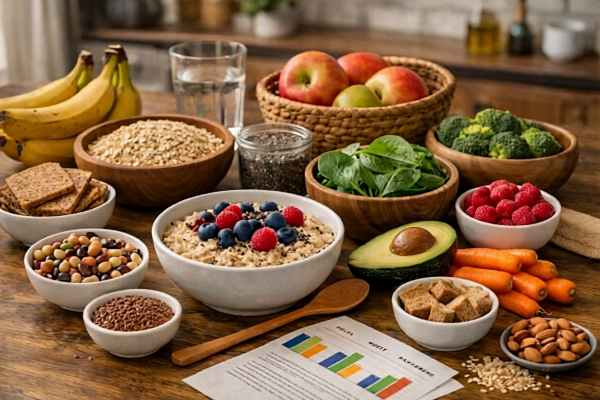
Fiber is a part of plant-based food that the human digestive system does not fully break down. Instead of being completely absorbed like many carbohydrates, much of it passes through the digestive tract and supports several processes involved in healthy digestion.
Fruits, vegetables, whole grains, beans, lentils, nuts, and seeds are common sources of dietary fiber.
Fiber Adds Bulk to Food in the Digestive Tract
One of fiber's important roles is adding bulk to the contents of the digestive system.
Insoluble fiber, found in foods such as whole grains and many vegetables, can help increase stool bulk. This can support regular bowel movements and make stool easier to pass.
Soluble Fiber Absorbs Water
Not all fiber behaves in the same way. Soluble fiber can absorb water and form a gel-like substance in the digestive tract.
It is found in foods such as oats, beans, apples, and certain seeds. This type of fiber can influence the texture and movement of digestive contents.
Fiber Can Support Regularity
A diet containing adequate fiber can help maintain bowel regularity. When fiber intake is low, stools may become harder and bowel movements may become less frequent for some people.
However, increasing fiber suddenly can sometimes cause bloating or gas, especially when the digestive system is not accustomed to a higher intake.
Water and Fiber Work Together
Fiber works best when combined with adequate fluid intake.
As some types of fiber absorb water, drinking enough fluids helps keep digestive contents softer and easier to move. Increasing fiber while drinking very little water may leave some people feeling more uncomfortable.
Fiber Feeds Certain Gut Bacteria
Some types of dietary fiber are fermented by microorganisms in the large intestine.
These gut bacteria can break down certain fibers and produce compounds called short-chain fatty acids. These substances are involved in communication between the gut and the rest of the body and contribute to the environment of the colon.
Fiber Can Help You Feel Full
High-fiber foods often take longer to chew and digest than highly refined foods. They can also add volume to meals.
This can contribute to a feeling of fullness, which may help some people manage overall food intake.
Whole Foods Make Fiber Easier to Get
Fiber is naturally present in many everyday foods. Vegetables, fruits, whole grains, pulses, beans, nuts, and seeds can all contribute to daily intake.
Choosing a variety of these foods provides different types of fiber rather than relying on a single source.
Processed Foods May Contain Less Fiber
Highly refined foods often lose some of their natural fiber during processing.
For example, whole grains contain more of the grain's original structure than refined grain products. Replacing some refined foods with less-processed alternatives can therefore increase fiber intake.
Increase Fiber Gradually
A sudden jump from a low-fiber diet to a very high-fiber diet can lead to temporary bloating, gas, or abdominal discomfort.
Increasing fiber gradually gives the digestive system more time to adjust. Spreading fiber-rich foods across meals can also make the change easier to tolerate.
Different People May Respond Differently
Digestive responses vary from person to person. A food that feels comfortable for one individual may cause bloating or discomfort for another.
People with certain digestive conditions may also need individualized advice about the amount and type of fiber they consume.
Final Thoughts
Fiber plays several important roles in digestive health. It can add bulk to stool, support regular bowel movements, provide nourishment for certain gut microorganisms, and contribute to a feeling of fullness.
A practical way to increase fiber is to include a variety of vegetables, fruits, whole grains, pulses, nuts, and seeds while increasing intake gradually and maintaining adequate fluid consumption.