Why Sun Protection Matters for Skin Health
Sunlight is an important part of everyday life, but too much exposure to ultraviolet (UV) radiation can affect the skin over time. Sun protection is therefore not only about avoiding sunburn; it is also about helping maintain healthier-looking skin and reducing long-term UV-related damage.
Understanding UV Radiation
Sunlight contains different types of ultraviolet radiation. UVA rays can penetrate deeper into the skin and are associated with premature skin ageing, while UVB rays are a major cause of sunburn. Both types can contribute to skin damage with repeated exposure.
The amount of UV exposure a person receives depends on factors such as time spent outdoors, location, season, time of day, and environmental conditions. UV radiation can also reach the skin when the weather does not feel especially hot.
How Sun Exposure Affects the Skin
Repeated UV exposure can damage collagen and elastin, the proteins that help provide skin with structure and elasticity. Over time, this can contribute to fine lines, wrinkles, uneven skin tone, and changes in skin texture.
Sun exposure can also stimulate increased production of melanin. This natural pigment helps protect the skin from UV radiation, but increased melanin production can contribute to tanning and the appearance of dark spots in some people.
Long-term, repeated UV exposure can also increase the risk of skin cancer. Protecting the skin is therefore an important part of general skin care.
Sunscreen as One Part of Sun Protection
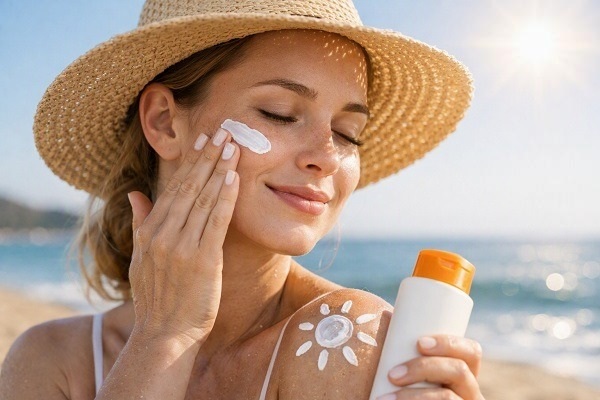
Sunscreen can help reduce the amount of UV radiation reaching the skin when it is applied properly. Broad-spectrum sunscreens are designed to provide protection against both UVA and UVB radiation.
Using sunscreen consistently on exposed skin can be especially useful during outdoor activities, commuting, travel, sports, or other periods when UV exposure is significant. Reapplication may also be necessary, particularly after sweating, swimming, or extended outdoor activity.
Physical Protection Matters Too
Sun protection does not depend on sunscreen alone. Clothing can provide an additional barrier between the skin and UV radiation. Long sleeves, trousers, wide-brimmed hats, sunglasses, and shade can all help reduce direct exposure.
Seeking shade during periods of stronger sunlight is another simple way to limit UV exposure without changing your entire routine.
Daily Habits Can Make a Difference
Sun protection works best when it becomes part of a regular routine rather than something reserved only for holidays or very sunny days. Applying sunscreen before going outdoors, using protective clothing when appropriate, and avoiding unnecessary prolonged exposure can all contribute to better long-term protection.
People with different skin types can respond differently to sunlight, but everyone can experience UV-related skin damage. Developing practical protection habits early can therefore be useful regardless of age or skin tone.
The Bottom Line
Sun protection is an important part of maintaining skin health. Regular UV exposure can contribute to premature skin ageing, pigmentation changes, and an increased risk of skin cancer. A combination of sunscreen, protective clothing, shade, and sensible outdoor habits can help reduce unnecessary UV exposure and support healthier skin over the long term.