Yen clings to intervention gains as traders stay alert to more
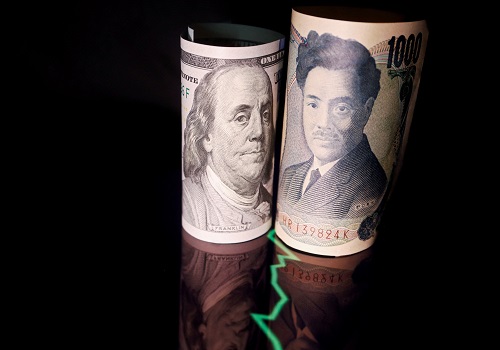
The yen held on to most of its intervention-driven gains on Tuesday, after last week's joint action by Tokyo and Washington to shore up the currency kept speculators wary of rebuilding bearish positions.
The yen weakened slightly in early Asia trade and was down 0.1% at 157.35 per dollar, having touched a three-month high of 155.20 in the previous session, though it remained well above its 40-year low.
The Japanese currency had surged as much as 5% over the last three trading sessions, with Japan confirming coordinated yen-buying intervention on Friday with the United States in a rare move.
"I expect concerns about the possibility of further intervention by Japanese and U.S. authorities (to) constrain downside pressure on the yen in the near term," said Tomo Kinoshita, global market strategist for Japan at Invesco.
"I believe that the yen is likely to appreciate against the U.S. dollar towards the end of this year... PM (Sanae) Takaichi's stimulus policy agenda has contributed to weakness in the yen but the market seems to have already priced in major elements of Takaichi's policy."
Against the euro, the yen held near a more than eight-month top and last stood at 181.19, while sterling bought 211.60 yen.
Monday's sudden surge in the yen stirred speculation that Japanese authorities had intervened again, though officials offered no confirmation.
Analysts at Citi said trading volumes in dollar/yen hit roughly $27 billion in the early morning window on Monday, compared with the recent averages of $1.9 billion.
DOLLAR TAKES A BREATHER
The dollar, meanwhile, was nursing losses, having slid in the wake of the yen-buying intervention and on the back of falling oil prices.
U.S. President Donald Trump said on Monday that talks with Iran were under way, warning that it was a "last chance" for Tehran to sign a good deal to end the five-month-old war, but Iran denied that any negotiations were being held or planned.
Against the greenback, the euro was little changed at $1.1511, having hit a 1-1/2-month peak of $1.1559 in the previous session, while sterling slipped 0.06% to $1.3427.
The dollar index bounced from a 1-1/2-month low to 99.98.
Investors had sold the dollar after the U.S. Federal Reserve kept rates on hold last week, with its losses accelerating following the yen intervention.
"We consider market participants overreacted by selling the USD in response to the Fed's decision to keep the funds rate unchanged. U.S. interest rates are going to be increased, but not on the markets' short timeframe," said Joseph Capurso, a strategist at Commonwealth Bank of Australia.
"This week's nonfarm payrolls for July is a key input into the timing of the eventual tightening cycle."
Markets are currently pricing in roughly 35 basis points worth of Fed rate hikes by December, with the focus turning to Friday's jobs report.
In other currencies, the Australian dollar edged 0.04% higher to $0.7003, while the New Zealand dollar fell 0.1% to $0.5867.